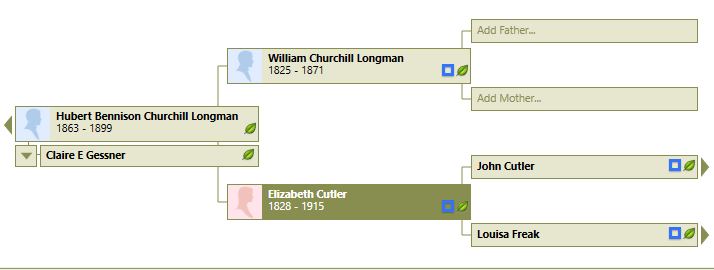
The Third Members’ concert of the Strolling Players’ Amateur Orchestra (ladies night) was given at the Queen’s Hall, and was favoured with a full attendance. In the unavoidable absence of Mr Norfolk Megone, Mr William Shakespeare took command of this first-rate force of amateur musicians. A varied programme was offered, including both light and serious music, ranging from Nicolai’s overture, “Merry Wives of Windsor,” to Schubert’s unfinished B minor symphony. The orchestral work was more successful in the less academical works. The rendering of the symphony was good, better, perhaps, in the second movement than in the first, but this work contrasts received somewhat mechanical an interpretation. In other words, its treatment may be described as unconvincing and wanting in feeling. The orchestra was far more successful in Mr Landon Ronald’s “Suite de Ballet” which, conducted by the composer, was received with much appreciation. Vocal relief was supplied by Miss May Hayden and Mr Whitworth Mitton. Miss Hayden is gifted with a contralto voice quite suited to the songs chosen as her contributions, but some more experience will no doubt enable her to improve her production. Mr Whitworth Mitton confirmed the good impression already formed of the quality of his voice. If it were not for the laziness of enunciation, which he will no doubt conquer in due time, it might be justly said that this young singer is one of the most grateful now before the public, and with attention given to this one fault, a very bright future lies in his grasp. Mr Julian Clifford gave a very intelligent reading of Liszt’s Concerto for piano and orchestra, the well-known No 1 in E flat. Mr Harold Garstin was an efficient accompanist, and Mr Edward Cutler, the eminent KC, favoured the audience with an organ recital between the parts, including two musicianly works from his own pen.
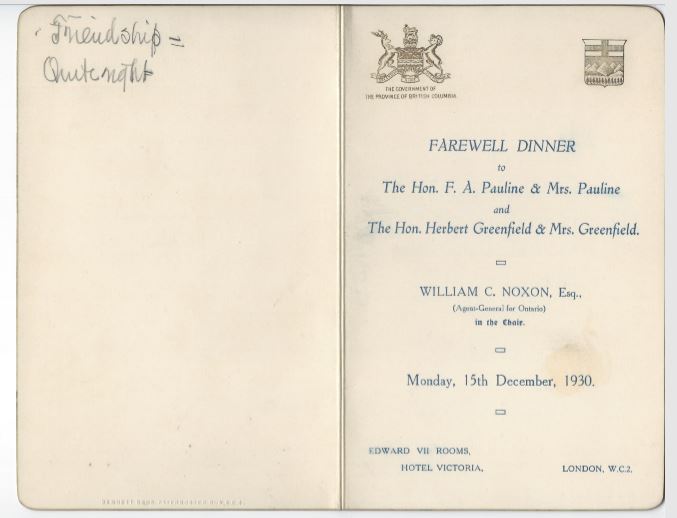
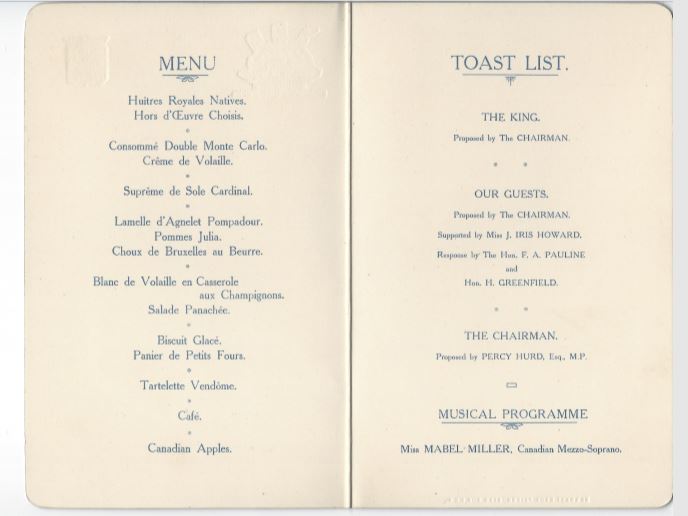
Victoria, BC – Dec 31 – (Canadian Press) – Frederick A Pauline, former Speaker of the Provincial Legislature has been appointed British Columbia Agent-General in London.
He will leave for England early next month. His work will consist chiefly in developing trade relations between Britain and this Province. He succeeds the late FC Wade.
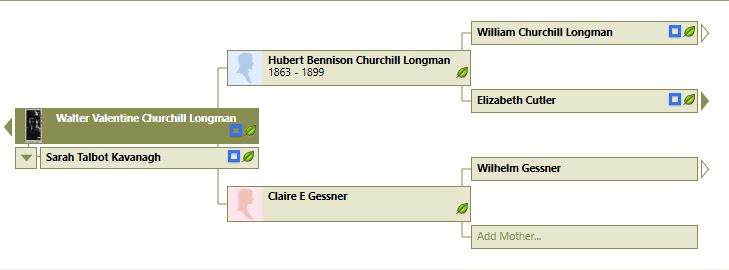
London – Walter Valentine Churchill Longman, 45 year-old ex-Major, walked out of the London Bankruptcy Court after his first meeting of creditors and said: “I am and always will be a perfect optimist.”
When Mr Churchill Longman was 31 and serving in the Regular Army in France – he inherited L20,000 from his father.
The war ended, and he received his first cheque. Within three years every penny had been lost in high living and gambling.
L70 Hotel Bills
“It was wonderful,” he said. “My hotel bills were never less than L70 a week.
“In those days in the West End I was considered a fine fellow. I was welcome at all the gambling parties. I lost as much as L1600 in a night on the turn of the cards.”
“Night after night I played for high stakes, and got back to my rooms with the milk in time for a bath and a quick breakfast in the morning. Then on to some fashionable gathering.
“I told the court that I had live a life of idleness for the past 15 years. I have, I suppose, but all the same I have tried to obtain work.
Failed in 1925
Mr Churchill Longman had also told the Assistant Official Receiver, Mr CT Newman,” that for the past 13 years he had been living on an allowance of L300 a year from his family.
He admitted a previous failure in 1925, with liabilities of L5000 and assets of L57.
The Assistant Official Receiver made an application for an adjudication in bankruptcy. Mr Churchill Longman opposed it, and said he hoped friends or relatives would settle his liabilities in full.
As he left Mr Churchill Longman said: “One of these days I shall be recognized again as a good spender. So why worry now?”
When Frederick A Pauline went to London as British Columbia’s Agent-General six years ago he renewed an association stretched across a gap of more than forty years. He was born at Henley-on-Thames, educated at St Mary’s College, Peckham Rye, and came to try his luck in Canada as far back as 1883. Now, “after many years spent largely depicting the wonders of this province, its might mountains and fertile valleys, its great lakes and noble rivers, its forest wealth and mineral riches, its fish, its fruit and scenic beauties,” he has returned to that part of Canada in which he first made his home nearly half a century ago.
Victoria extends a hearty welcome to Mr Pauline on his arrival home. Our citizens will wish him long years of health and comfort. He has been an excellent Agent-General; he provide himself to be a very worthy successor to the able officials who preceded him. It is not always possible to assess the value of work done in Great Britain by the province’s official representative. It is a form of advertising service that does not produce such visible returns as cash sales over the counter. But from time to time in the last six years the public of British Columbia has had forceful reminders of the untiring activities of the office at the foot of Regent Street. The invisible dividend – and, of course, there have been many visible results in the form of new settlers and new capital of no mean volume – must have been very considerable and worth a great deal more than the outlay required to produce it.
The financial aspect of the Agent-General’s office, incidentally, is of more than passing importance to the taxpayers of the province. At one time this fine building, of which all British Columbians who go to London are justly proud, was regarded as a very costly luxury; but all that has changed in the last ten years. Mr Pauline told the Canadian Club in Vancouver the other day that the revenue from BC House – a great part of it is rented – pays interest, sinking fund charges, maintenance and running expenses, and contributes $20,000 a year to the cost of work carried on. Indeed, the entire cost to the taxpayers in 1929-1930 was less than five thousand dollars – less than the price of three legislators for seven weeks’ work! Since the substantial change in this regard has been made during Mr Pauline’s regime, there is additional justification for saying he has been an excellent Agent-General.
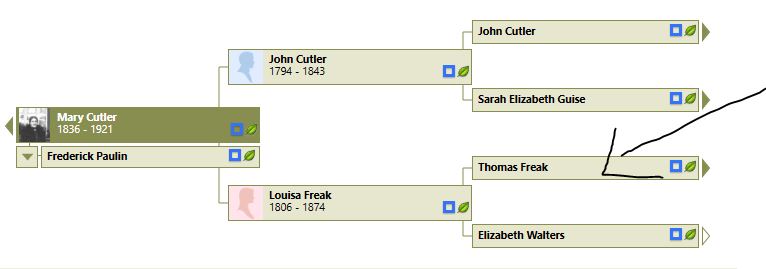
Dartmouth-row, Blackheath – by Mr Charles Wright, at the Green Man Inn, Blackheath, to-morrow, March 18 at 4 in the afternoon, by order of the proprietor, Thomas Freake, esq, who is removing from thence, and will give immediate possession.
A substantial and very compact leasehold residence, pleasantly situate in the preferable part of Dartmouth-row, fronting the avenue leading to the Heath, and contains 5 good bed rooms, a drawing room with a balcony, entrance hall, store room, kitchen, scullery, large coal vault, very dry wine and beer cellars, and other conveniences, and a neat veranda or covered way from the front leading to the entrance hall; held of the Right Honorable Earl Dartmouth, for a term of ten years and a half, at Christmas last, at the low ground rent of 10l per annum. May be viewed, from 11 till 4 o’clock, the three days preceding the sale, and particulars had on the premises; at the place of sale; Dover Castle, Broadway, Depford at Garraway’s coffeehousel and of Mr Wright, surveyor and auctioneer, Blue Stile, Greenwich.
Residence, Blackheath – by Mr Ellis, at Garraway’s, on Tuesday next, June 13 at twelve, unless previously disposed by Private contract.
An excellent family house, with garden, lawn, and shrubbery, most delightfully situate in the Grove, Blackheath, the residence of Thomas Freake, Esq removing to Bromley. The house contains spacious drawing and eating rooms, boudoir, tastefully papered, opening to conservatory, library, numerous bed-chambers, entrance hall, and suitable domestic offices, held on lease for 26 years, at a low ground rent.
Tickets for viewing, may be had by applying to Mr Ellis, 36 Fenchurch street, of whom printed particulars may be had; also at the place of sale, and auction mart.
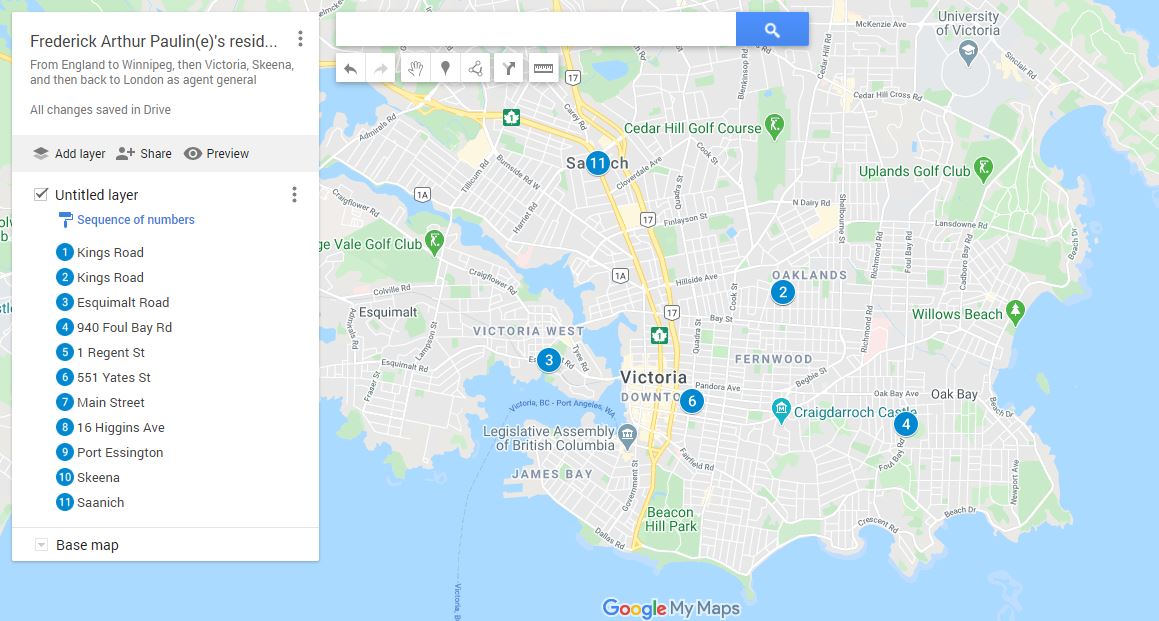
Here is the map for Frederick Arthur Paulin(e) taking into account his addresses in Winnipeg, Victoria, Skeena River, and London when he was agent general.
I know that Frederick Paulin and his large family lived in Peckham, Camberwell, in 1874-5. I can pinpoint the addresses of his home and his business from several sources. For his home, we know he lived at 13 Camden-Grove, Camberwell because his daughter Sarah (aka Sadie/Sally) who was born there, his mother-in-law, Louisa Cutler, died there in April 1874. For his brewery, the Anchor, we know he owned it thanks to a great history of the Oxfordshire brewery industry by Mike Brown [Oxon Brews: The Story of Commercial Brewing in Oxfordshire, Mike Brown, Brewery History Society, 2004], who identified Frederick as owner of the brewery in his work. Also because Frederick went bankrupt, we know he owned the brewery, and have its address.
The London Gazette, 4 Sep 1874 p 4304
In the London Bankruptcy Court.
In the matter of proceedings for liquidation by arrangement or composition with creditors, instituted by Frederick Paulin of the Anchor Brewery, Saint George’s Road, Peckham, and of no 13 Camden-Grove, Camberwell in the County of Surrey, Brewer.
So the question arises where are these places? My great wish in looking these places up was of course to see if the buildings in question were still standing, and if so, what they could say about how the family lived when they were resident in Peckham.
My first search was for the house on Camden-Grove. I went first to Google Maps and tried to find Camden Grove, and that was a bust, the street name no longer exists. So then I went and googled the name Camden Grove and Peckham/Camberwell to see if there were other ways to find the street. I stumbled upon this great website which lists the changes to street names in the London area [www.maps.thehunthouse.com/streets/old_to_new_abolished_London_street_names.htm ] and found that the street had changed its name to Cronin Road in 1912. And phew, there you go.
I went onto Google street view and found Cronin Road, and was greatly disappointed to see some rather ordinary 1970-80s style low-rise apartments populating the street. The area has clearly changed a great deal for when the Paulins lived there in the 1870s.
Cronin Street from Google Maps – streetview
And now for the Brewery. I first looked up St George’s Road, Peckham on google maps to see if there was any indication that the brewery was still there. There were some older buildings on the road, but nothing clear, and to be honest the road is not small enough to say for sure, so I googled the brewery online, thinking, hoping that the place had kept its name. Nothing in the present, but I did find a website that talked about pubs in London, and there it stated that the Anchor Brewery and Tap, 165 St George’s Way was open 1878-1919, but was closed and demolished. [www.pubology.co.uk/pubs/12087.html] Now here of course, the dates don’t quite match, but it is likely not a coincidence that the Anchor Brewery and Tap on St George’s Way, Peckham was named that way, and was connected in some way the Anchor Brewery that Frederick owned, on St George’s Road. When Frederick bought it it had that name, so I would imagine they are one in the same, with just a few years gap in ownership and running. Counting Frederick’s financial downturn, the Anchor had been the subject of two bankruptcies in less than three years, so it was not a great investment.
Knowing it was demolished was a bit sad, but I checked out the neighbourhood to see if there were any indications of what it was like in the 1870s when the Paulins owned the brewery, but sadly, it too, like the neighbourhood they lived in, was much changed.
St George’s Way, Peckham from Google Maps – streetview
I did note that the St George’s Way is straddled by a very large park called Burgess Park. I decided to google it, to see if it was there when the brewery was, and it was not. In fact, the park was “carved out of a highly built up area of the city. Virtually all of the land now occupied by the park was previously housing, industry and transport infrastructure.” [https://en.wikipedia.org/wiki/Burgess_Park ] The park included a ginger beer factory and the Grand Surrey Canal. According to Wikipedia, the area suffered heavily from bombing in the Second World War, and a lot of buildings were demolished to make way for the park. Work for the park began in about 1943, and it has grown since then. [http://www.gardenvisit.com/landscape_architecture/london_landscape_architecture/visitors_guide/burgess_park_landscape ]
Finding that the neighbourhoods I was looking into are no longer extant is a big disappointment, but there is still a lot that can be learned from trying to map the history of the Paulins in Peckham. And that is from finding out how close they lived to their business. And they did not live that far away. I looked at the map of the area carefully and plotted the approximate locations of the brewery and the home, and really, he could have walked to work.
Pointing to where the Anchor Brewery was likely located, and where the Paulins lived in Peckam, Camberwell – from Google Maps
Not much found, but interesting nonetheless.
This was originally published on my gilliandr blog, and I received this great email in 2020 regarding the location of Cronin Street:
I’ve just read your article about the brewery in St Georges Way, Peckham with interest. My grandmother was born at no. 39 Camden Grove North in 1897 and live there until the houses were pulled down in 1963/64. My father was born there in 1923 (it was then 39 Cronin Road) and I was born there in 1947. I just want to comment on the map you have marked because Cronin Street is not in the same position as Cronin Road was to St Georges Way. No 39 was very near to St Georges Way so your ancestors would very likely have walked there.
Wallace Grinie to Frederick A Pauline, 15 Nov 1930
[1]
Personal
69 Dofe’s Avenue
Strawberry Hill
Twickenham Middsx
15th Nov 1930
Dear Fred Pauline
To say that I am sorry to hear of your leaving your present position in London to return to BC but [illegible] my feeling – I am very very sorry indeed – I know partly of the reasons for the change but of one thing I am certain + that is that you are leaving a hard task for the next man to follow up if he is to continue
[2]
To maintain the high degree of efficiency readily attained in the Agent General Office here in caring for the interests of Western Canada as a whole – and the Dominion. I must thank you form the bottom of my heart for your encouragement + ever ready help in the efforts I have made + am making in London as a financial missionary for BC. I shall try to see for next week but have been unwell lately again. I hope Mrs Pauline is
[3]
Well + all your family including your good + genial self. Perhaps for will be glad to lay down the reins of the office + take an easier time I don’t know but it is an honourable post + honourably + well have for filled it + many times have I heard that said of you for here. With every good + kind wish to you + yours + may God Bless you in your retirement.





 The Amazing Paulin(e) Family